


Fungus on the toes is a problem that worries many.Itching, burning and unsightly appearance of skin and nails are just a few of them.This disease is dangerous because of complications that are more difficult to treat.However, you can overcome the problem if you take the treatment of fungal infection (mycosis) seriously.
Why does athlete's foot occur?
Fungus is one type of infectious agent that affects the skin.These are complex and very persistent microorganisms.Therefore, fungal diseases require a serious and comprehensive treatment approach.
Fungi have their favorite habitat on the skin.First of all, this is the skin of the toes and nails.The reason is obvious - the feet usually lie in shoes, in which a lot of moisture and dirt accumulates, and it is also very hot.Therefore, the fungi that live on the feet have a lot of food and a good microclimate for reproduction.Some types of complex fungi are more likely to attack the skin, while other types of fungi, such as yeast and mold, prefer the nail bed.It is also possible to be infected with several types of fungi at once.
Promotes the development of fungus on the toes:
- reduce local and general immunity;
- poor foot hygiene;
- uncomfortable and tight shoes;
- Irregular changing of socks or stockings;
- wearing socks or stockings made of synthetic materials, not breathable;
- normal hypothermia or overheating of the feet;
- circulatory disorders in the legs;
- varicose veins;
- chronic diseases of the cardiovascular system, diabetes;
- long course of antibiotic treatment;
- increased sweating of the feet;
- lack of vitamins and mineral elements in the body;
- mechanical damage to the skin, calluses, leg injuries;
- overweight, excessive physical pressure on the legs;
- Irregular toenail clipping.
The most important factors are reduced immunity and poor circulation in the legs.A decrease in immunity can occur for various reasons.Usually this is a severe chronic disease, mainly infectious.Also, immunity can be reduced due to HIV, taking immunosuppressants, and cancer.Equally important is poor circulation in the toes - caused by vascular disease, blood, diabetes, smoking.
Foot mycoses can develop in men and women.They appear more often in adults than in children.
Some types of fungi always live on the skin and are activated only in unfavorable conditions, for example, fungi of the genus Candida.And other species are transmitted from person to person.Infection can occur when visiting the gym, bathhouse or shower, if the person does not use personal shoes.People who wear other people's shoes or socks, or allow others to use them, also expose themselves to a significant risk of infection.Infection often occurs when using the same towels, manicure accessories, etc.Factors that increase the possibility of infection are wounds on the surface of the skin, deformation of the nail plate.
Symptoms of toe mycosis
The main symptoms of foot mycosis are itching and burning.You may also experience redness of the skin, small blisters, increased peeling and roughness of the skin, and an unpleasant odor.The first symptoms of skin mycosis can be confused with simple irritation.
Symptoms of onychomycosis
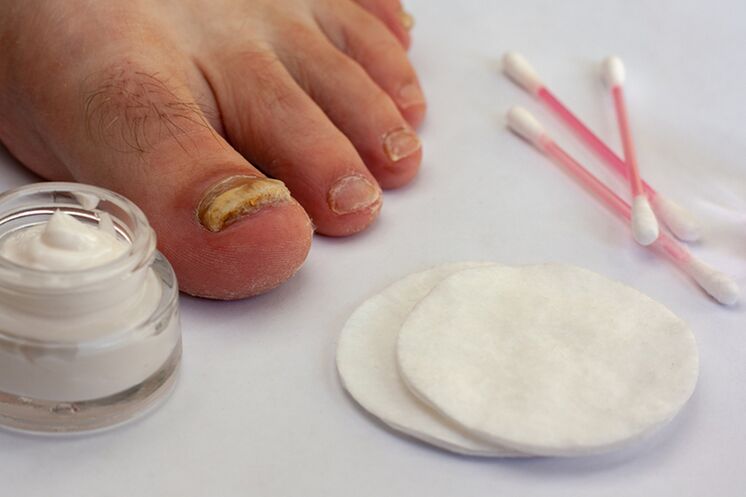
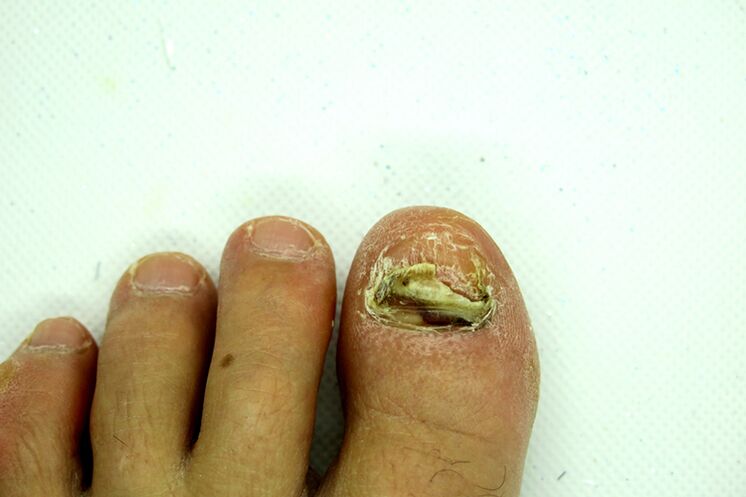
Fungus can affect not only the skin, but also the nails.The last type of mycosis is called onychomycosis.The main symptom of onychomycosis is a change in the structure and appearance of the nail, its increased fragility.Nails turn yellow, grooves and cracks appear on their surface, the nail plate thickens and becomes deformed.If left untreated, the nail will gradually peel away from the base of the nail and collapse.
What does the fungus look like on the finger: photo
You should never diagnose yourself using pictures.Diagnosis must be made by a qualified dermatologist.
Only he can determine the type of fungus.To do this, he may need not only an external examination of the foot, but also a laboratory test of skin scrapings.
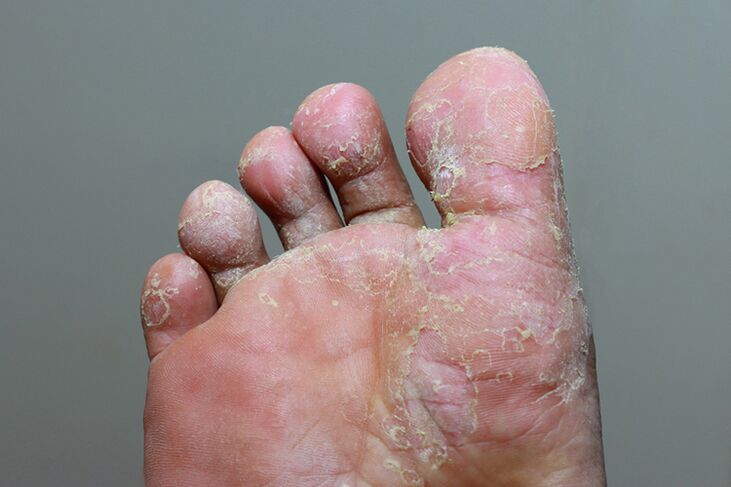
However, the presence of signs that even vaguely resemble those shown in the pictures is a reason to worry and consult a doctor.
The treatment of the disease is complex and is carried out at home under the supervision of a doctor.
Fungus on the little finger
Fungus can affect the skin of any toe.But the little toes are the most vulnerable to infection.Little toes in tight shoes are often compressed, which causes chafing on the skin and affects blood circulation.When the nail of the little finger is affected, the disease develops very quickly, faster than other nails.When the little finger is infected, the infection can quickly affect other fingers.
Fungus on the big toe is treated in the same way as fungus on other parts of the skin.For onychomycosis on the nail of the little finger, the most rational solution may be to remove the nail plate.This operation will not cause much inconvenience to the patient, because the nails on the little finger grow quickly.However, until the nail grows back (this may take 3-4 months), antifungal medication must be used to prevent reinfection.
How to treat toe fungus?
Treatment of mycosis should begin at the first alarming symptoms.First of all, you need to contact a dermatologist for a diagnosis.Before starting therapy, it is necessary to establish the fact of the presence of mycosis and the type of pathogenic microorganisms.For this purpose, the doctor will take a scraping from the skin or cut a piece of nail (if the nail is affected).Blood tests are taken, blood sugar tests.Foot skin mycoses must be distinguished from:
- other infectious skin diseases;
- allergic reactions;
- dermatosis caused by diabetes, vascular disease, stress and nervous disease.
For the treatment of mycoses on the feet, local drugs (sprays, ointments, creams) are most often used.Only in severe cases the doctor can prescribe antifungal tablets.The most commonly used tablets are fluconazole, itraconazole, and terbinafine.
Treatment is based on the use of antimicrobial agents.Preparations of this type contain substances that kill fungi (fungicide) or stop their reproduction.
Local preparations with antibacterial, anti-inflammatory and keratolytic properties are also used.Antibacterial agents are prescribed if suppuration occurs, that is, a bacterial infection accompanies a fungal infection.Anti-inflammatory drugs cope well with unpleasant symptoms - itching and burning.However, they do not affect the cause of the disease - pathogenic microorganisms.Keratolytic agents include zinc, sulfur and sulfur-salicylic ointment.They accelerate the regeneration of skin tissue by accelerating the exfoliation of dead epidermis.
For the treatment of foot mycoses, baths with antiseptic agents are also used - a solution of potassium permanganate, iodine, salt, baking soda, boric acid.Bathing should be done before going to bed for 20 minutes.To prevent infection by spores, you need to treat healthy skin areas with chlorhexidine, iodine, hydrogen peroxide, and potassium permanganate.For the treatment of onychomycosis, varnishes with antimycotic substances are used.This varnish must be applied to the nail plate.
Ointments and creams must be applied to washed and clean skin with the frequency specified in the instructions for the product.The area where the ointment is applied should be slightly larger than the area of visible damage.To apply varnish on the nail plate, the nail must be steamed, its uneven edges must be sanded with a file, and the surface of the nail must be degreased with an alcohol solution.
In folk medicine, to get rid of mycosis on the feet, decoctions of medicinal plants are used - chamomile, calendula, sage, St. wort.John's wort, mint, vinegar solution, onion and lemon juice.
What to do if the fungus on your finger does not go away?
Treatment of mycosis is a long and difficult process.Fungal microorganisms are very persistent, and it is impossible to get rid of them in a few days.Sometimes months of careful therapy are needed.In this case, therapy should not be interrupted for one day.Treatment of onychomycosis cannot be completed until a new, healthy nail plate has developed.
It is also important to consider other factors related to the development of this disease.Failure to maintain skin hygiene and optimal temperature conditions for the feet can nullify all therapeutic efforts.This means it is necessary to regularly wash the surface of the skin of the feet and avoid overheating or hypothermia.It is also important to avoid mechanical damage to the skin, excessive pressure on the feet, cuts and injuries.Being overweight puts more stress on your feet, so if you're overweight, you may want to consider losing weight.
If the patient always wears shoes infected with fungus, then no strong medicine will help, because the place of dead microorganisms will soon be taken by new ones.Therefore, it is necessary to eliminate all factors that contribute to re-infection.You can't walk in someone else's shoes or socks.Socks must be washed thoroughly and changed regularly.The inner surface of the shoe should be sprayed well with an antifungal agent.
With persistent mycosis, you need to analyze your general health.Perhaps this will help identify the cause of impaired immunity and blood circulation in the legs.Therefore, it may be worthwhile to undergo a full examination and rule out problems with the heart, blood, blood vessels, and organs of the endocrine system.
Finally, it is possible that microorganisms simply develop resistance to the antimicrobial agents used.Then need to change the medicine.Systemic antimicrobial tablets may be required.The dosage of the drug should be chosen by a dermatologist.